
From Leeds to the Airwaves: Wavio’s World Is Getting Bigger

Something has changed at Wavio Records. Not through one giant announcement or overnight transformation. It has happened piece by piece.
A studio. A live-performance platform. International releases. Artists travelling beyond the UK. And now, for the first time, a regular place on the radio.
For an independent label that has spent much of its existence trying to create opportunities for the artists around it, the past few months have started to feel less like a run of separate projects and more like the beginnings of something connected.
The Wavio Room gives artists somewhere to be seen.
The Wavio Way now gives them somewhere to be heard.
And around those platforms, the music itself is beginning to travel considerably further than Leeds.
The Wavio Way on Leeds Dance Community Radio takes to the airwaves
On 6 September, Wavio Records Co-Founders Zulu Abantu and Krids made their first broadcast on LDC Radio 97.8 FM, bringing The Wavio Way to terrestrial radio in Leeds.

The name itself isn't new.
The Wavio Way originally existed as the label's podcast, but radio gives the concept an entirely different purpose.
For years, Wavio has been asking people to pay attention to emerging artists.
Now it has somewhere it can actually play them.
That matters.
Independent artists spend a remarkable amount of their careers trying to gain access.
Access to playlists.
Access to press.
Access to stages.
Access to radio.
Access to audiences.
Having a regular show doesn't suddenly solve all of that, but it does give Wavio another platform it can use itself.
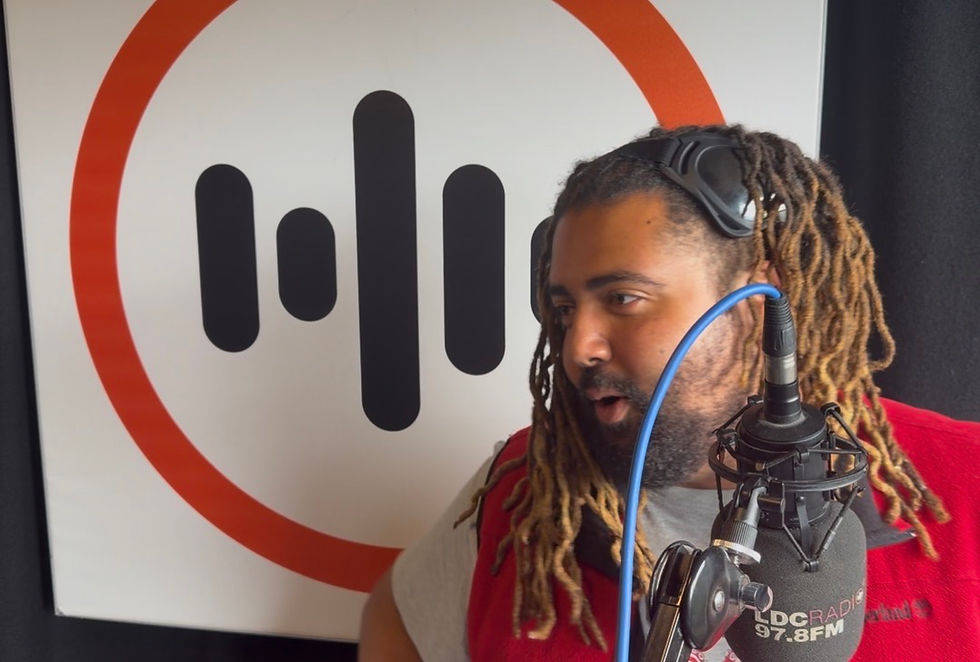
“We’ve spent years telling people there are incredible artists around us who deserve to be heard. Now we’ve actually got a platform where we can play them ourselves. That changes the responsibility a little bit. The Wavio Way has to be bigger than me and Krids having a chat on the radio. I want artists to feel like this is somewhere their music can genuinely reach people.” —Zulu Abantu, Co-Founder, Wavio Records
The first show came with nerves.
Naturally.
Performing in front of a room full of people is one thing. Sitting behind a microphone knowing anybody in the city could be listening is another.
But the nerves quickly gave way to something more familiar.
Music. Conversation. Leeds. Wavio.
For Krids, keeping that informality is the whole point.
“I don't want us going on there sounding all proper just because we're on radio now. We're basically having the same chats we'd have anyway — what's going on in Leeds, who's making good tunes, who people need to know about. Now there's just a mic in front of us and people can actually hear it. If we can put someone onto an artist they'd never have found otherwise, that's mint.” — Krids, Co-Founder, Wavio Records
The result gives Wavio something it has never had before.
A regular broadcast platform.
And alongside The Wavio Room, something interesting is beginning to take shape.
One allows artists to be seen.
The other allows them to be heard.
The Wavio Room
Before the radio came the cameras.
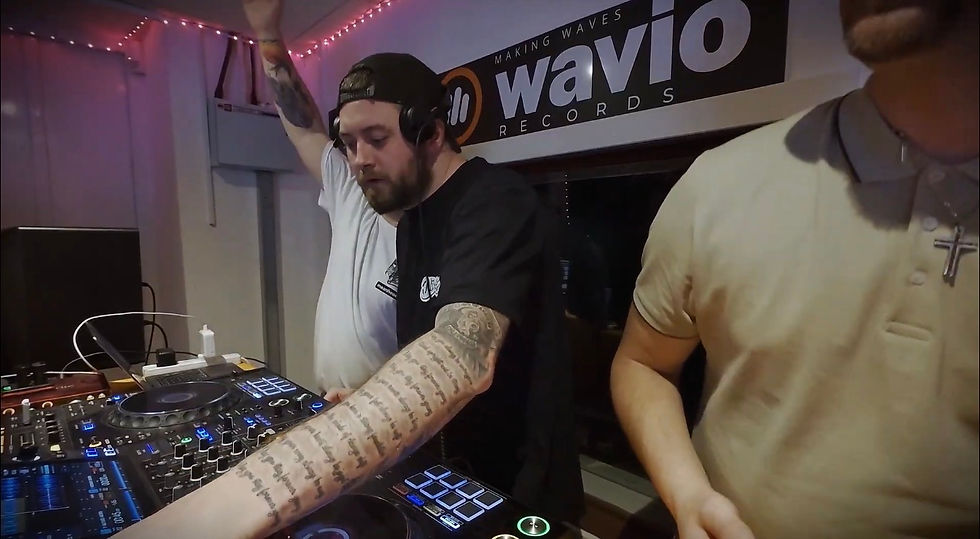
The Wavio Room was built around a simple idea: create an intimate environment where artists could perform properly and document it.
Not a phone held up from the crowd. Not fifteen seconds disappearing into social media by the following morning. A performance worth keeping.
Episode One focused on Hip-Hop.
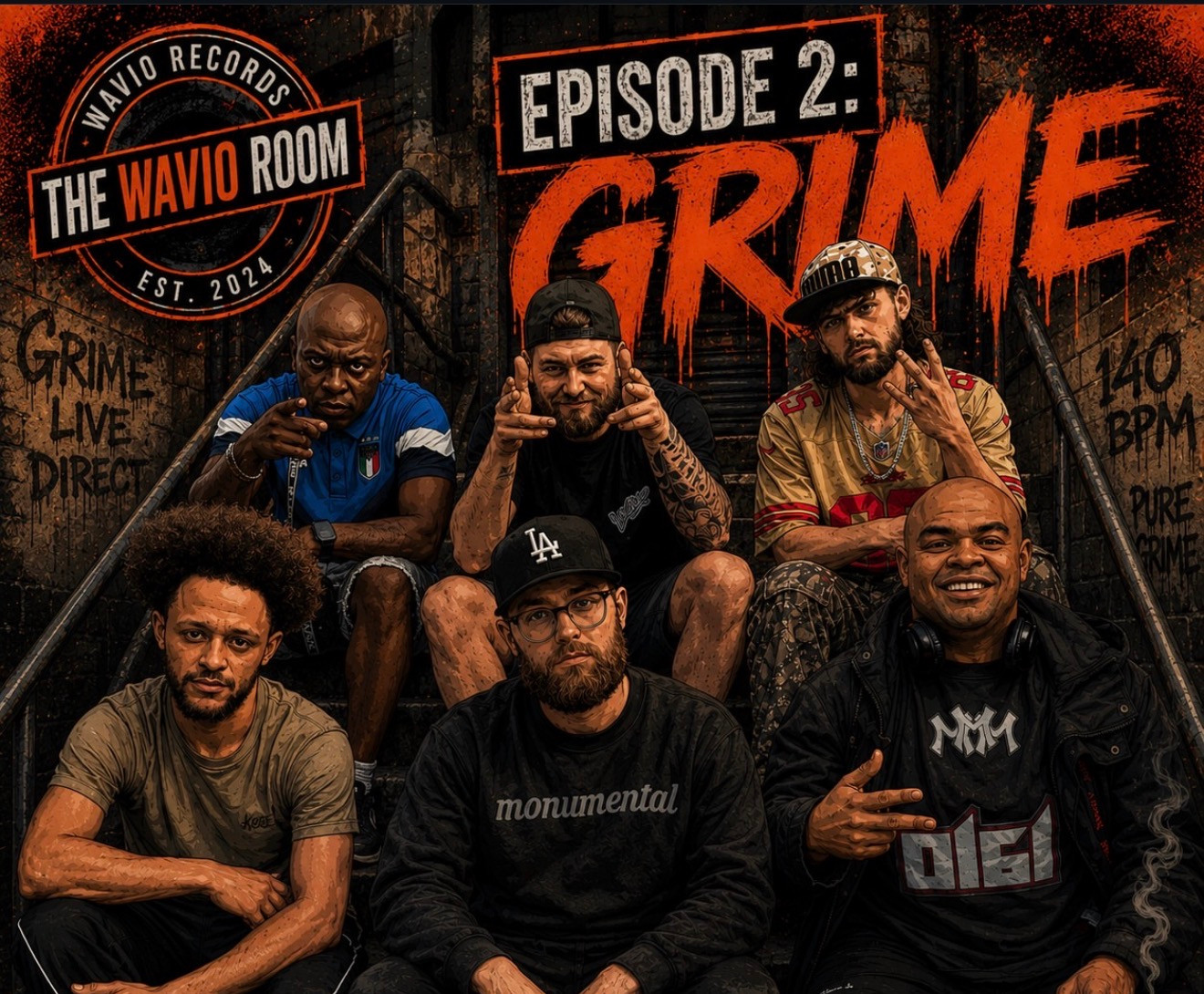
Episode Two moved into Grime.
Then in July came the International edition, where Wavio decided filming twelve artists in a single day was apparently a reasonable use of everyone's time.
It was ambitious.
Slightly chaotic.
And increasingly representative of how Wavio seems to operate.
But the most interesting part has been what happens around the performances themselves.
Artists arrive to film and meet other artists.
Producers meet vocalists.
People exchange numbers.
Collaborations start.
Someone who entered the building to perform one song can suddenly find themselves connected to a much wider community.
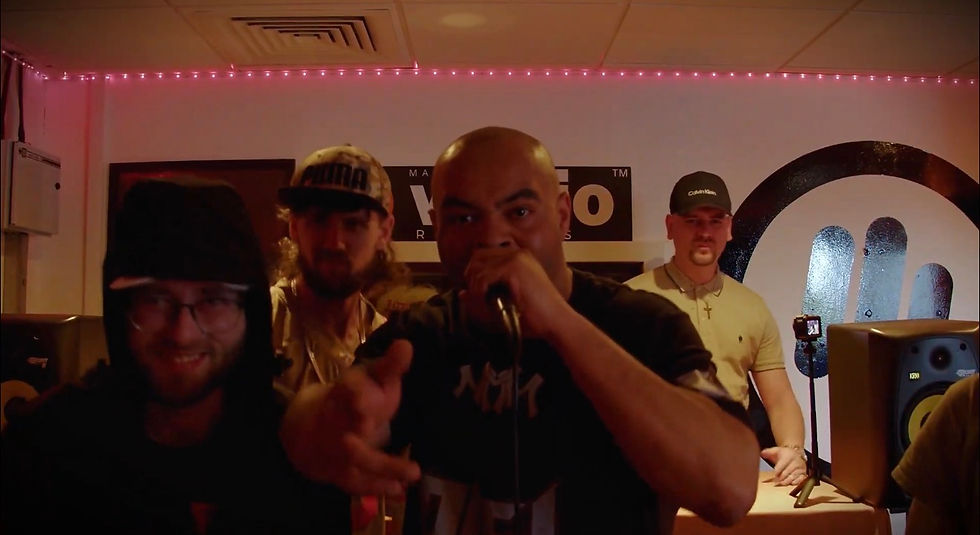
That makes The Wavio Room difficult to describe purely as a content series.
It is increasingly an entry point.
The organisation is no longer simply trying to release music.
It is creating more of the environment around it.
Walk a Mile in My Shoes
That does not mean the record label has stopped being a record label.
This summer saw Zimbabwean artist Msiz'Kay release his EP Walk a Mile in My Shoes through Wavio Records.
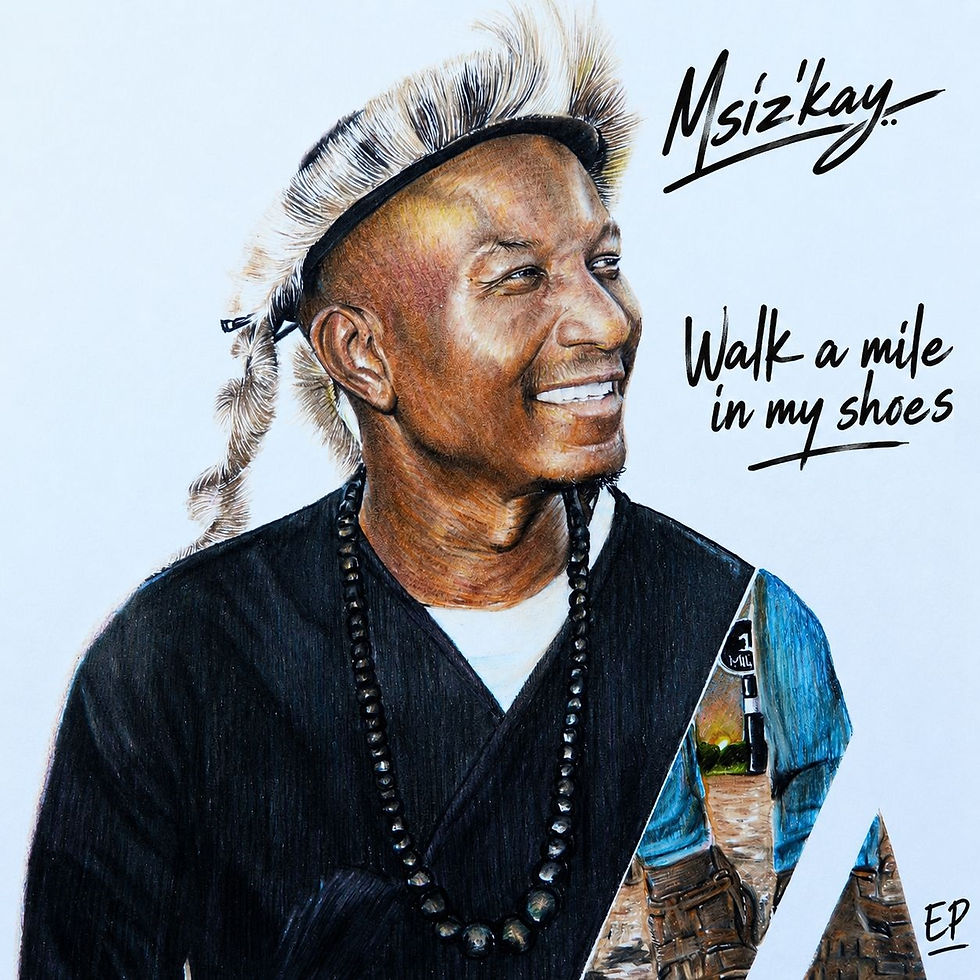
For Wavio, the release continues an international relationship that has always felt more natural than calculated.
The organisation is based in Leeds. But the stories
around it increasingly aren't.
Zimbabwe is part of that story. Taiwan is becoming part of it too.
And for Blackson, Italy has always been part of it.
Blackson returns to Italy
For Blackson, performing at Rebel Moon Festival in Bari was not simply a Leeds artist travelling abroad for another show.
Italy is already woven into his identity.
Raised there, Blackson has carried that background throughout his music and branding, making the country an important part of the story surrounding him as an artist.
So a festival appearance in Bari carries a different weight.

It is international. But it is also personal.
A return to a place that helped shape him.
That dual identity — Leeds in the present, Italy embedded in the foundation — has increasingly become part of what makes Blackson distinct.
And the Bari appearance arrives as he begins preparing for something considerably bigger.
A new album is currently being developed for early 2027, marking the next major phase of his career.
Blackson has kept the message surrounding that period characteristically simple.

“Change is coming.”— Blackson
Three words.
Not much explanation. Perhaps deliberately.
But following a year that has already taken him back to Italy and deeper into Wavio's developing ecosystem, the statement feels less like a slogan and more like a warning that the next version of Blackson is already being assembled.
That idea of artists returning to places that shaped them has also been present in Zulu Abantu's own year.
Zulu Abantu's Homecoming Tour
For Zulu, 2026 has also been about returning to places that shaped him long before Wavio existed.
In August, he travelled to Szeged, Hungary, for a headline performance at Rakpart 62.
The show carried considerably more weight than a standard international booking.


Zulu spent part of his childhood in Hungary, and returning there as an artist made the night feel less like an away show and more like a homecoming.
It brought together different parts of his life.
A childhood connection to Hungary.
An artist career developed largely in the UK. And now Wavio beginning to operate around both.
Then, just weeks later, the Homecoming Tour moved considerably closer to where it all began.
On 11 September, Zulu performed in Wolverhampton, around twenty minutes from where he grew up. A year earlier, a show that close to home might have felt like the defining moment of the year.

This time, it landed differently. Not because it mattered less.
But because the scale of everything surrounding it had changed.
Radio.
The Wavio Room.
International releases.
Artist development.
The show still mattered. It just no longer had to carry the entire story.
“The Homecoming Tour was personal for me because both shows connected back to places that shaped who I am. Hungary was part of my childhood and Wolverhampton is basically home. A year ago, those shows would probably have been the centre of everything. Now they sit inside this much bigger thing we're building with Wavio. That's a strange feeling, but a good one.” — Zulu Abantu, Co-Founder, Wavio Records
That tour also reflects something increasingly central to Wavio's identity.
The organisation is rooted in Leeds.
But the people around it carry histories that stretch considerably further.
Blackson has Italy.
Zulu has Hungary and the Midlands.
Msiz'Kay brings Zimbabwe into the picture.
And that idea becomes even clearer with one of Wavio's largest current recording projects.
Humble Lu and three years in Leeds
For the past few months, Wavio Records has been working closely with Taiwanese rising artist Humble Lu on an album centred around his three years living in Leeds.
It is one of those projects that makes considerably more sense emotionally than it does on a spreadsheet.
Humble came to Leeds.
He built a life here.
He made friends.
He found collaborators.
He accumulated the relationships, nights out, memories and places that slowly turn somewhere unfamiliar into somewhere important.
And now, as that chapter changes, he wants to preserve it.
“I spent 3 years in Leeds and it's a special chapter in my life and I want take a little bit of Leeds back with me. I'm so excited and grateful Wavio Records is making this happen.”— Humble Lu
Wavio's production team has been heavily involved in creating the record, bringing together producers, features and collaborators from across the wider community.
It means the album is becoming more than a collection of songs.
It is a record of a period.
Three years of somebody's life translated into music before they move thousands of miles away from the place where those memories happened.
There is something particularly fitting about a Leeds label helping a Taiwanese artist take Yorkshire back to Taiwan.

For years, music organisations in cities like Leeds have spoken about exporting local talent to the world.
Sometimes culture travels in the other direction. Sometimes somebody arrives here, becomes part of the city and takes part of it home.
The pieces are starting to connect
A year ago, it would have been relatively easy to explain what Wavio Records was.
A Leeds independent record label.
That answer is becoming increasingly incomplete.
The Wavio Room documents artists.
The Wavio Way broadcasts them.
Wavio Studios gives them somewhere to create.
Wavio Records releases and develops their music.
Msiz'Kay is connecting the organisation with Zimbabwe.
Blackson has returned to Italy while preparing an album for early 2027.
Zulu Abantu's Homecoming Tour has connected his present back to Hungary and Wolverhampton.
And Humble Lu is turning three years in Yorkshire into an album that will eventually travel back towards Taiwan.
Taken separately, those stories could look unrelated. Together, they reveal something about what Wavio is becoming.
Not a label defined by one genre. Not an organisation confined to one city. Not simply somewhere that uploads music to streaming platforms.
Leeds remains the centre of gravity. But increasingly, the people moving through Wavio bring other places with them.
Italy.
Zimbabwe.
Hungary.
Taiwan.
Yorkshire becomes the meeting point rather than the boundary.
There are still rough edges.
Plans change.
Projects develop in real time.
And anyone expecting Wavio to resemble a perfectly polished industry machine has probably misunderstood the appeal. It is still being built in public.
That is what makes this period interesting.
Because somewhere between a radio studio in Leeds, cameras rolling inside The Wavio Room, a festival stage in Bari and a homecoming show in Hungary, the world around Wavio Records has quietly become much bigger.
And with Blackson already promising that “change is coming” ahead of 2027, there is little indication that the pace is slowing down.
More artists are being seen.
More artists are being heard.
And the music is travelling.

By the artists. For the artists.
Become Undeniable.


Comments